
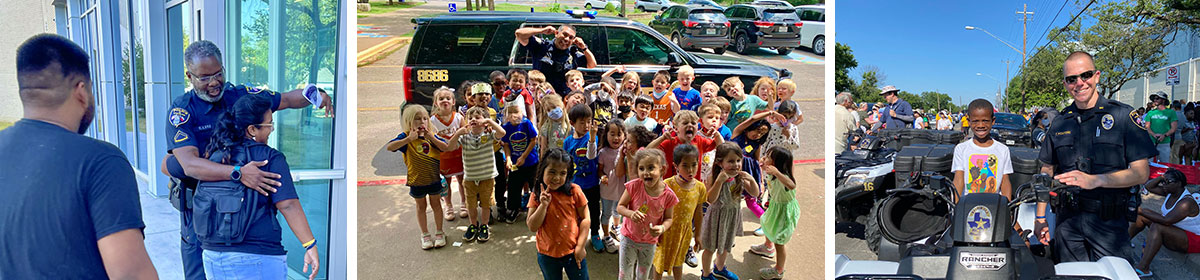
Austin ISD's Police Department is dedicated to the healthy development of students and employees. We strive to add time and resources back where they count—the classroom. Education is the ultimate mitigator of risks. Please take time to review each resource, which address the risks associated with various threats and hazards, including bullying, gangs and drug abuse.
Safe Firearm Storage & Gun Safety
Keeping firearms stored safely at home or in vehicles is an essential aspect of gun safety. Practicing safe storage habits can go a long way in preventing tragedies and keeping firearms out of the wrong hands.
Why Safe Storage Matters
- Guns are now the #1 cause of death for American children.
- 76% of school shooters get their guns from their homes or from the homes of their relatives.
- 5.4 million children live in homes with unsecured guns.
- More than a third of all unintentional shootings of children take place in the homes of their friends, neighbors, or relatives.
Texas Law & Adult Responsibility
Under state law, any person under 17 is considered a child, and adults must ensure they cannot access "readily dischargeable" firearms. It isn't enough to simply hide a weapon; if an adult "should have known" a child could find it and fails to secure it, they can face criminal negligence charges.
-
Securing the Firearm: Properly securing a firearm means using active measures like trigger locks, safes, or locked racks. Storing firearms in a safe or a locked cabinet can prevent unauthorized access, theft, and accidents.
-
Keys and Ammo: Always keep the keys or combinations in a secure, separate location. By keeping guns locked and ammunition stored separately, you create a vital barrier that protects both your family and your legal standing.
-
Consequences: If a child gains access because a gun was left out, the owner may face fines. If that access leads to injury or death, legal consequences become much more severe, including potential jail time.
For more resources, visit the Texas Department of Public Safety at safegunstoragetexas.com.
Tips to Share With Your Children
Please share the following safety rules with your children to help them understand how to stay safe:
-
Real guns are tools for grown-ups only. To stay safe, we never touch them.
-
Even if a gun looks like a toy or looks "empty," we treat it with huge respect and stay back.
-
Identify a Safety Friend. A Safety Friend is a trusted adult who knows how to keep you safe — like a parent, grandparent, teacher or police officer.
-
If a friend or someone else picks up a gun, don't stay to watch. Leave the room immediately and tell your Safety Friend what happened.
-
Just like a hot stove or a sharp power tool, guns can hurt people very badly, so we leave them to the adults.
-
We never point a gun (or even a toy that looks like one) at people or pets. We always practice kindness and safety.
-
You can’t tell if a gun is safe just by looking at it. The safest choice is always to keep your hands off.
-
On shows and movies, actors use pretend props and "movie magic." In real life, there is no reset button, so we follow our safety rules every time.
Gun Safety Resources
-
Moms Demand Action for Gun Sense in America / Everytown for Gun Safety
- Keep ‘Em Safe Texas
- Gun Storage
- Texas Gun Sense
- Youth Gun Safety
- Lock Arms for Life
Bullying Prevention
Mental Health/Suicide Prevention
- DIAL 988 – National Suicide & Crisis Hotline – 24/7 FREE and confidential help.
- Austin ISD Mental Health Resources
- Integral Care
- Crisis Texas Line: Text HOME to 741741
- DFPS Texas Youth Helpline
- CareSolace: Multilingual support, care regardless of insurance, easy access: 888-515-0595
Crime Stoppers
- Capital Area Crime Stoppers or call 512-472-TIPS (8477).
Cyber Safety
- Austin ISD Cyber Safety
- Texas School Safety Center – Digital Safety
- NetSmartz Cell Phone Safety
- NetSmartz: Cyber Safety Home
- Digital Citizenship Glossary: Navigating the Internet Without Crashing and Burning
- NCMEC - Help Remove or Stop the Spread of Explicit Images
Drug Awareness
-
Texas Health and Human Services: Substance Use and mental health services
-
Palmer Drug and Abuse Program (free support groups for youth (13-25yoa)
Suspected Child Abuse
- Center for Child Protection
- NCMEC - Issues Affecting School-Aged Children
- NCMEC - Report Suspected Online Child Exploitation
Parent and Teacher Resource Support - How to Talk to Your Kids
- Presentations and Tip Sheets
- Simple Safety Lessons for Younger Children
- Help Your Child Navigate the Digital World
- Sextortion Information [ENG] [ESP]
Gang Awareness
This guide provides common warning signs of gang involvement but may not be all-encompassing. Families should look for multiple signs to indicate possible gang involvement because some of these indicators alone are also common among youth not involved in gangs. Families are encouraged to seek help early by contacting school personnel, local law enforcement, faith leaders and community organizations for assistance.
-
- Drug/alcohol use
- Unusually low grades in school
- Changes in friends
- Keeping late hours
- Having large sums of money or expensive items that cannot be explained
- Wearing predominantly one color over another, or refusing to wear a certain color
- Wearing or displaying folded bandanas
- Admitting to being in a gang or to having gang associates
- Drawing gang symbols
- Fascination with gang lifestyle
- Loss of interest in sports or family activities
- Unexplained physical injuries (fighting-related)
- New tattoos
- Carrying a weapon
-
Texas law is very specific in defining what constitutes evidence of gang membership. Section 61.02 of the code of criminal procedure provides a list of criteria to be considered in classifying someone as a gang member. If a person meets any two or more of the following criteria, he or she can be documented by law enforcement as a gang member (subject to change by the legislature).
- Self Admission The person admits gang membership. This can include photos or internet postings of the person portraying himself/herself as a gang member.
- Identification by Reliable Person The person is identified as a gang member by someone known to be reliable.
- Corroborated Identification by a Person of Unknown Reliability The person is identified as a gang member by a person whose reliability has not been established, but the identification is corroborated through other means, such as an officer’s observations, or other observed criteria.
- Evidence That the Person Frequents Known Gang Areas and Associates with Known Gang Members A “known gang area” can be a neighborhood, a school, a street corner or any other place where gang activity has been documented.
- Evidence That the Person Uses (in more than an incidental manner) Criminal Street Gang Dress, Hand Signals, Tattoos or Symbols This can include the use or display of bandanas, articles of clothing or accessories of a specific color, or that are worn in a certain manner. Symbols may include letters, numbers, words, marks or other forms of expression.
- Evidence That the Person has Been Arrested or Taken Into Custody with Known Gang Members for an Offense or Conduct Consistent with Gang Activity
- Evidence That the Person has Visited a Known Gang Member (other than an immediate family member) in a Penal Institution This includes jail, prison or juvenile detention.
- Evidence that the Person has Used Technology to Recruit or Solicit Gang Membership This can include use of the internet, email, text messages, etc.
Gang membership is illegal in public schools in Texas. The Texas Education Code (Section 37.121) classifies gang membership or gang activity in schools as a Class C Misdemeanor, punishable by up to a $500 fine. There are also serious academic consequences for gang membership and activity in school, up to and including removal to an alternative education placement or expulsion, depending on the level of gang activity or membership. The law applies to both adults (17 and older) and juveniles (those under 17 years of age).
-
- Spend quality time with your child.
- Talk to your child.
- Participate in your child’s school activities.
- Know your child’s friends and their families.
- Know what music and television shows your child likes to watch and listen to.
- Teach your child how to deal with peer pressure.
- Encourage your child to get involved with positive activities such as sports, after-school programs, volunteer work or job training.
- Discuss the consequences of being in a gang or hanging out with gang members.
- Make sure your child knows that you will not tolerate gang involvement.
- Be a good role model.
If you suspect your child is involved in gang activity or you would like information concerning gang activity on your campus, please contact us at 512-414-1142 or by email at aisdpd@austinisdpolice.org.
-
Listed below are common consequences experienced by youth involved in gangs. This is not a list of every consequence that might occur and does not mean that all youth involved in gangs will experience each of these consequences. If you have questions about consequences, please talk to a teacher, parent, local law enforcement, faith leader or other trusted adult.
Negative Consequences of Gang Membership
- Criminal record.
- Drug or alcohol abuse.
- Death/serious injury.
- Jail/incarceration.
- Low grades/dropout/expulsion.
- Putting career opportunities at risk.
- Putting family in danger.
- Strained family relations.
Keys to Staying Gang-Free
- Spend quality time with your family or a trusted adult.
- Focus on school and get help with your classes if needed.
- Watch television shows and listen to music that have a positive message.
- Learn to deal with peer pressure and practice saying NO.
- Choose your friends wisely.
- Get involved with positive activities such as sports, after-school programs, volunteer work, or job training.
- Find positive role models.
If you would like information concerning how to avoid gang membership, leave a gang, or prevent gang involvement, please contact us at 512-414-1142 or by email at aisdpd@austinisdpolice.org.
Parent Information on School Safety
- What is the Standard Response Protocol
- What Do Parents Do During a School Emergency? - Reunification
- A Parent’s Guide to School Safety Toolkit
- School Safety and Security Committee
- Back to School Safety
Threats
Select a menu below to expand
Threats Are No Joke! is a powerful public service announcement that highlights the serious consequences of making or sharing threats, even if they’re meant as a joke. In this PSA, viewers see how a single text message shared among students quickly escalates into chaos, triggering fear, confusion, and a full law enforcement response.
This PSA serves as a critical reminder that in today’s world, there’s no such thing as “just a joke” when it comes to threats about school violence, school safety, or harm to others. Whether spoken out loud, posted online, or sent in a text, threats, real or fake, can lead to legal consequences, school discipline, and have lasting impacts on a student’s future, including college and military eligibility.
What Parents/Guardians Should Know
- Under Texas law, threats (even false ones) that cause fear, disrupt the school environment, or trigger an emergency response can be considered criminal offenses.
- A student can have consequences at school and with law enforcement, even if the threat was made from home.
- Jokes or offhand remarks like “I’m going to kill him” or “She’s so annoying, I hope she dies,” while sometimes are not technically threats, can still result in serious questioning and consequences.
- Sharing or reposting threats on social media, even without knowing if they’re real, is dangerous and could lead to consequences.
- If a student overhears a threat or sees something online that concerns them, they should report it to a trusted adult or use their school’s reporting tool. This is not being a “snitch,” it’s being responsible.
How You Can Help as a Parent/Guardian
- Talk to your child about the difference between joking and threatening language.
- Encourage them to think before they post, text, or say something that could be misinterpreted.
- Reinforce the message: Don’t do it. Don’t share it. Report it.
- Find out the process your child’s school uses for anonymous reporting.
Together, we can create safer schools by helping our kids understand that threats, even the ones they think are harmless, are not a joke.
FREQUENTLY ASKED QUESTIONS
Listed below are some frequently asked questions that you may get. While this isn’t everything you could be asked, this is a starting point for you and your child.
- Q: Can the police show up at your house or to the school?
A: Yes, police officers can show up at your house or school if they are investigating an issue or making an arrest.
- Q: What is considered a threat? What are some examples?
A: Under Texas law, any threat of violence to a person or a place, with the intent to cause fear or serious bodily injury, cause police officers, firefighters, or EMS to respond, or if a threat prevents or interrupts the use of a building or room, like a school building, or school related event, can be considered a threat, which is a crime. A person also commits a crime if he or she knowingly communicates or circulates a report of a present, past, or future emergency that he or she knows is false. Some examples may include threatening a shooting on campus, threatening a bomb on campus, threatening a specific person, sharing a fake threat on social media, or reposting a threat.
- Q: What if someone says, “She is so annoying, I hope she dies!”?
A: This is not a threat, just mean, and they could still have consequences for causing fear or questioned as to why they were saying that. This is probably not a threat, but it is not something that they should say. It can be misunderstood, or it may scare someone, and they could have consequences for causing fearin others.
- Q: What if someone just overheard my child making a joke and it got taken out of context?
A: Your child should not make jokes about school harm or harm to others, but if a person feels like they were going to harm them or the school, your child could still have serious consequences.
- Q: If my child makes a threat at school, do they only have consequences at school?
A: No, making a threat could affect your child’s entire life. It could show up on their permanent record or affect their future, like getting into college or enlisting in the military.
- Q: If your child makes a threat from home, can they still have consequences at school?
A: Yes, if your child makes a threat from home against their school or another person, they could have severe consequences at school and with law enforcement.
- Q: What should your child do if they hear or see someone making a threat?
A: Your child should tell a trusted adult. That could be a teacher, principal, police officer, school resource officer, parent, coach, etc. Their school also has procedures in place for a student to report concerning behaviors anonymously. If you or your child are unsure where or how to report, ask a teacher, principal, or school resource officer to show you. You or your child can talk to a teacher, principal, or school resource officer and find out how your child’s school wants threats reported. Your child’s school has ways to report anonymously.
- Q: What should my child do if their friend has been saying or posting some things that seem concerning, but they don’t want to be a snitch?
A: Report it to a trusted adult. If your child’s friend is doing or saying something that scares them or makes them concerned, that doesn’t make them a snitch. Your child is reporting it tokeep their friend, them, and others safe.
Human Trafficking
Domestic and Dating Violence
- SAFE Alliance
- Love is Respect
- Bulletins for Teens: Dating Violence
- Domestic Violence Support Hotline
-
National Domestic Violence Hotline: 1-800-799-SAFE (7233) or 1-800-787-3224 (TTY)
-
National Dating Abuse Hotline: 1-866-331-9474